NAKOA FOUNDATION
crew resources

Nā Pe'a Core Values
The limited space on a canoe physically and mentally confines people of different temperaments into very close quarters. If the people on the canoe do not have a common set of values or patterns of expected behavior, differences of opinion and perceptions can quickly erupt into conflict. "Core Values" carry with them expected patterns of behavior. This predictability reduces stress, misunderstanding, and conflict.
Click here to learn more.
Unique Features Of The Hawaiian Canoe
The Hawaiian canoe was designed to handle the unique ocean conditions that surround the Hawaiian islands.
As a result there are specific features of the Hawaiian canoe that make it unique.
Na Pe'a uses these canoe part names in our teachings and daily workings to honor and perpetuate traditional Hawaiian knowledge systems.
Having no barrier reefs, the Hawaiian Islands are exposed to the direct force of the North Pacific's relentless ocean swells.
The dominant Moa'e wind (East to West trade winds) blow down the Hawaiian Island chain, making sailing a canoe from West (island of Kaua'i) to East (Hawai'i island) difficult.
These factors, along with the relatively short distances between Islands, the Hawaiian Canoe was designed primarily as a paddling canoe with a sail for auxiliary power.
Many South Pacific island canoes were designed as primary sailing vessels.
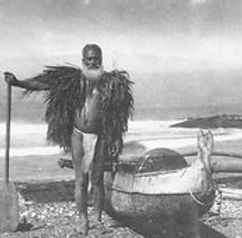

He Makeʻe Waa
Curriculum for the Na Pe'a Program. He Make'e Wa'a explores the physical, intellectual and spiritual elements that make the Hawaiian canoe, not only unique... but... Hawaiian.
Click here to learn more.

UNIQUE DESIGN
We do not know exactly what the original voyaging canoes that brought the first settlers to Hawaiʻi looked like but we know from both ethnographic and archeological evidence that voyaging between Hawaiʻi and the islands to the south was active between 1100 and 1300 AD. Then, for climatic and social reasons, the two-way voyaging stopped. It was in this isolation that the Hawaiian canoe evolved into the unique form we know today.

Unique Hawaiian Design Features
Early European explorers described the Hawaiian canoe as lacking the ornamentation that was common in the canoes of the South Pacific. They marveled at the workmanship on the Hawaiian canoes, describing them to "rival the best wood workers of Europe".
Below are the unique characteristics that distinguish the Hawaiian canoe from other Pacific Island canoes. While each characteristic is not necessarily in and of itself unique to Hawaii, collectively, they create a design found nowhere else.

Ka'ele: The Hull
The traditional hull was made of one piece, hollowed out from a large log. The Hull is U-shaped, lacking any real keel. The bow and stern are tapered, narrow and generally rounded.
The hull is widest just to the rear of the center of the hull. There is frequently a bulge in the lower section of the hull giving the hull a calabash shape. The rounded hull is designed to glide over rough choppy seas and for launching and landing through breaking surf.

Kupe: Bow and Stern End Covers
The Mua (bow) and Hope (stern) of all canoes were covered over with a finely carved end piece called the Kupe. The Kupe prevents water from spilling into the hull of the canoe while underway. The end of the Kupe is finished with an upturned end called the Manu. The Manu is designed to break through on coming waves and allow the canoe to rise up and out of rough seas.

Ama: Outrigger Float
The Ama was traditionally constructed out of a single piece of wood. The Hawaiian ama is gently curved with both the Lupe (forend) and the Kanaka (rear end) rising out of the water. This curved shape along with the uniquely shaped "Lupe" makes the Hawaiian ama peculiar to Hawaii.
The Lupe is carved to form a cut water which reduces drag when traveling in heavy seas. The Kanaka is usually flattened on the top and left round on the underside.

'Iako: Outrigger Booms
'Iako are the booms of the outrigger that connect the ama (float) to the ka'ele (hull) The 'Iako are also the booms that connect the two hulls of a Wa'a Kaulua, or double canoe.
The 'iako for the Wa'a Kaukahi, single canoe, are made out of Hau and extend out on the left side of the Ka'ele. The ideally shaped 'iako is arched as it extends out from the hull then curves down to where it connects directly to the ama. Hawaii is the only place in Polynesia where both 'iako are attached directly to the ama.
In other island groups the 'iako were indirectly connected to the ama by a series of smaller sticks.

Nā Pe'a Oli (Chants)
Chants are an important part of the Na Pe'a program. They are used to introduce ourselves when we visit others and when others visit us. They are used to help us focus our thoughts and enter into a state of Lokahi. They are also used to help us maintain an mental state of appriciation or Mahalao. To hear the audio and see the written version of the Oli hit the GO button.

Canoe Part Names
Each piece of the canoe is specifically named, and often within each piece, individual parts had names too. Names, whether belonging to a canoe part, a plant, a wind, or a person, are given for a specific reason. Na Pe'a uses these canoe part names in our teachings and daily workings to honor and perpetuate traditional Hawaiian knowledge systems.

Sea Condition Names
Understanding what the different conditions of the ocean surface means is critical for making sound decisions on when to set sail or when to run for shelter. Hawaiian culture devised a method to categorize sea states and the hazards that they posed.

Aho Hoa Waʻa (Lashing)
Aho hoa waʻa is the Hawaiian term for rigging a canoe. The rigging process is time consuming but when completed is beautiful and very efficient.
Prior to Western contact and the introduction of metal tools and fasteners, every component of the Hawaiian Canoe was lashed into place. The Kuaʻiako lashings (fig 1 and 4) to the Lanalana lashing (fig 2), to the Moʻo (fig3), Kupe (fig 6) and Peʻa (fig 5), were all held together with Aho .
In todayʻs canoes, lashings are largely confined to the Kuaʻiako lashings, the Lanalana lashings, and the lacing of the Peʻa. The Moʻo are today glued to the Nīao and the Kupe are made in once piece and usually glued or screwed to the Nīao of the Kaʻele.

Hawaiian Cloud Names
Cloud formations are useful tools in predicting weather conditions.

How Does a Hawaiian Sail Work?
There are two basic types of sails. They both work on the principles of "Lift" and "Drag".
Click here to learn more.

Moon Phases and Tides

Knots and Knot Tying
Knot tying skills are critical to operating a sailing canoe safely and effectively.
Click here to learn more.

Coastal Navigation
Coastal navigation utilizes steering points called Kukuioʻolopu. Multipile steering points are used at one time to determine forward progress, side drift, ab directional orientation.
Click here to learn more.

Wahipana Important to Nā Peʻa
Coastal navigation utilizes steering points called Kukuioʻolopu. Multipile steering points are used at one time to determine forward progress, side drift, ab directional orientation.
Click here to learn more.

USGS Topo Maps With Ahupuaʻa
Click here to learn more.

Ahupua'a Names and History
Each District on the Island of Hawaii was subdivided into smaller land management unites called Ahupua'a. This link will take you to maps and historical information on the Hawaii Island Ahupua'a.

Lava flow ages USGS map
Click here to learn more.

NOAA WEATHER FORECAST
Click here to learn more.

Ulukau Hawaiian Dictionary
Click here to learn more.